
Table of Contents
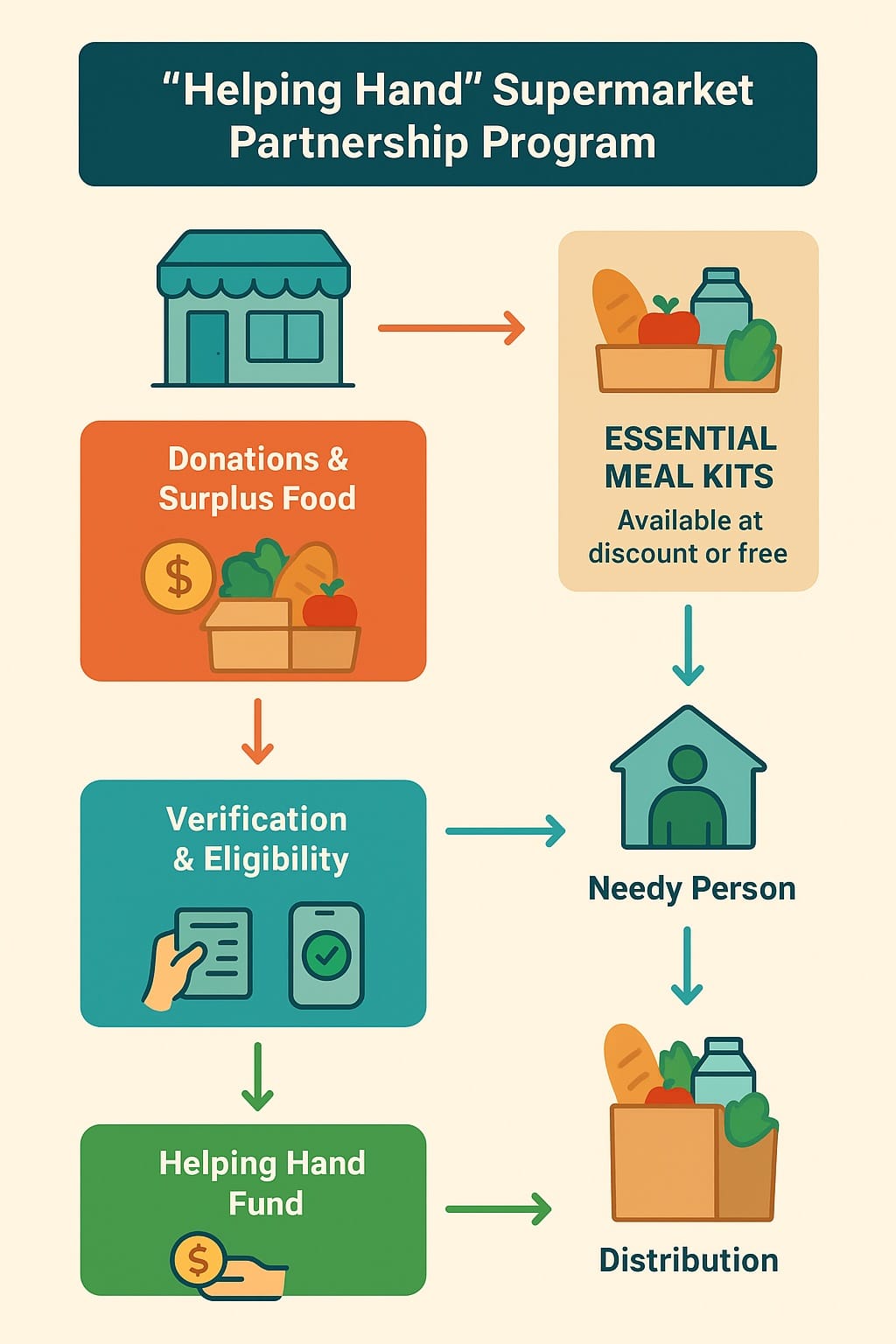
Supermarkets can transform part of their SNAP-based revenue model into a Community Food Equity Initiative, directly supporting local households impacted by benefit cuts.
Key Components:
- Essential Meal Kits: Curated weekly kits with staple items (rice, beans, milk, bread, eggs, vegetables, etc.), available at no cost or deep discount for verified low-income households.
- Surplus Conversion: Use unsold or near-expiry items to create ready-to-cook or ready-to-eat kits, ensuring food safety and nutritional balance.
- Nutritional Balance: Include meal plans prepared by in-house dietitians using affordable staples, ensuring families get balanced nutrition on a budget.
🧾 2. Verification and Eligibility (Non-Intrusive, Privacy-Respecting)
- Use existing SNAP or WIC verification systems or link to Food Pulse / local charity databases.
- Local nonprofits, churches, or schools can vouch for households facing food insecurity.
- A QR-based digital ID system can let families scan once at checkout to qualify for the discount or free kit—no paperwork at the counter.
💚 3. Supermarket-Funded “Food Equity Wallet”
Supermarkets can set up a digital wallet or points system that automatically adds credits for needy households, funded by:
- Customer donations (e.g., “Round up your bill to feed a neighbor”).
- Corporate social responsibility (CSR) funds.
- Vendor contributions — suppliers can donate inventory or funds to get tax benefits.
- Unused loyalty points voluntarily transferred by customers to the “Helping Hand Fund.”
🥕 4. Surplus Redistribution Network
Supermarkets can build or join a real-time platform (like Food Pulse) that:
- Tracks inventory close to expiry.
- Automatically flags it for donation or deep-discount inclusion.
- Matches it with local food pantries, charities, and community kitchens.
Example:
Walmart’s “Food Recovery App” could automatically list soon-to-expire bakery, produce, or dairy products for community groups to claim same-day.
🏡 5. In-Store Community Food Hubs
Every large supermarket could dedicate a small area as a “Community Corner”:
- Free pickup of surplus food bags.
- Drop-off zone for customer food donations.
- Free nutrition workshops and meal-prep demos.
- Information kiosk to help families register for assistance or local resources.
🍲 6. “Meal for Meal” Campaign
For every customer purchase above a threshold (say $50), the store sponsors one free meal kit for a family in need.
- Promotes corporate goodwill and customer loyalty.
- Generates measurable social impact metrics for annual CSR reporting.
🔄 7. Local Partnership Ecosystem
Supermarkets can partner with:
- Local farms for fresh produce donations.
- Food Pulse-type platforms for logistics and eligibility verification.
- Schools and universities for volunteer packaging drives.
- Culinary schools to train students in preparing balanced meal kits using surplus ingredients.
🚛 8. Mobile Pantry & Meal Kit Delivery
Using store trucks or delivery partners:
- Weekly delivery of kits to senior citizens, disabled residents, or rural families.
- Volunteer-driven distribution during emergencies (e.g., holidays, heat waves, storms).
📊 9. Transparency and Impact Dashboard
Each participating supermarket can display:
- Number of families helped.
- Pounds of food saved from waste.
- CO₂ and landfill savings.
- Volunteer hours contributed.
This promotes trust, accountability, and engagement.
💬 10. Storytelling and Community Empowerment
Supermarkets can feature:
- Real stories from families helped.
- Local recipes using kit ingredients.
- “Cook with Care” videos featuring community members.
This turns the initiative into a shared human experience, not just charity.
🧩 11. Integration with Food Pulse
If integrated with your Food Pulse platform, you can:
- Track donations, kits, and beneficiaries in real time.
- Connect supermarkets, farms, and pantries under one digital ecosystem.
- Send alerts to users when discounted or free kits are available nearby.
- Allow charities and local governments to coordinate with store managers.
🌍 12. Long-Term Vision — “Food Security Co-op Model”
Supermarkets can evolve this into a Food Security Co-op, where:
- Members (donors, volunteers, beneficiaries) participate in shared governance.
- Surplus and CSR funds create a community food bank credit system.
Ultimately, no one in the community goes hungry — even without government aid.


