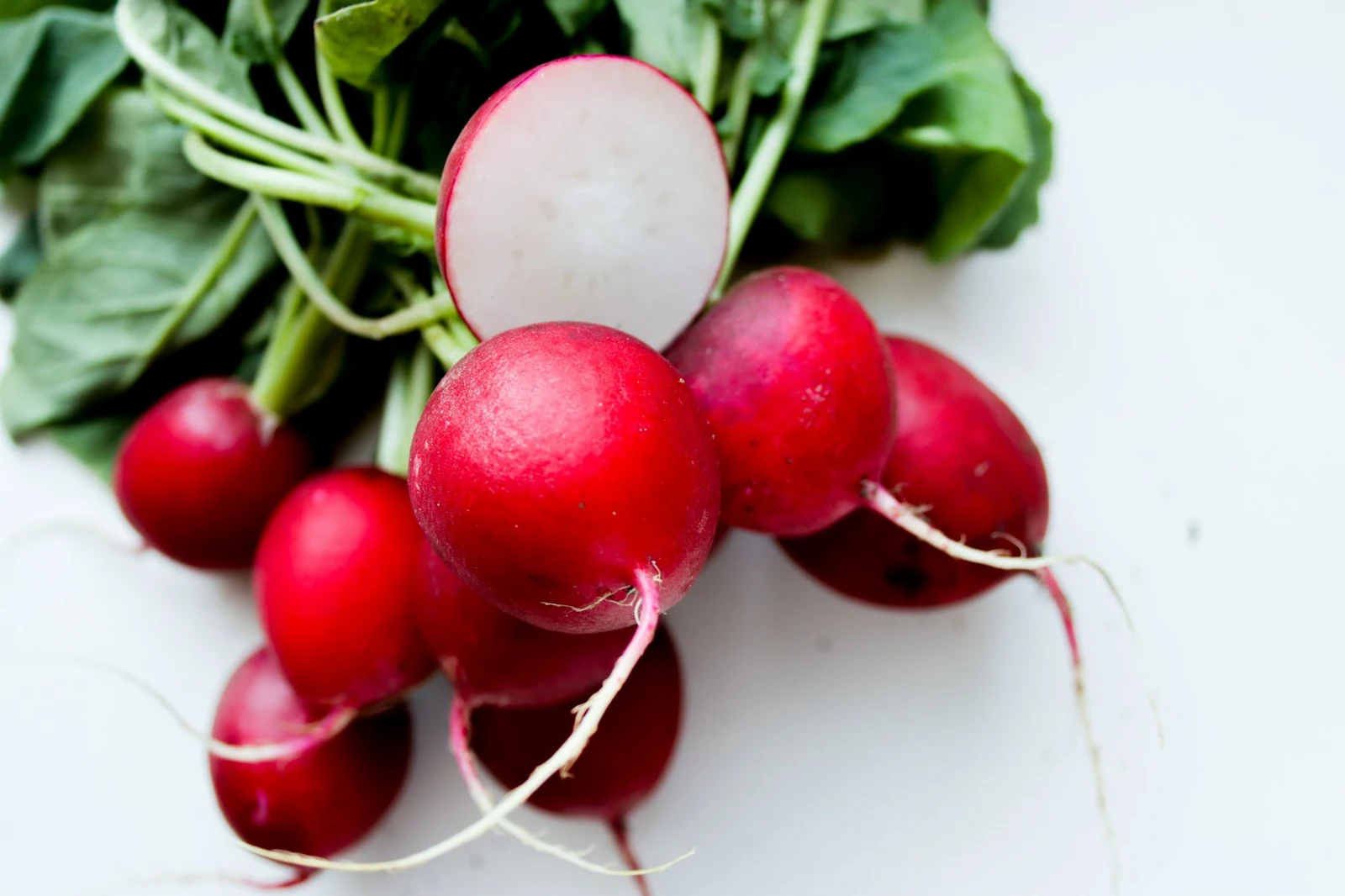
Radishes are edible root vegetables belonging to the Brassicaceae family. They come in various shapes, sizes, and colors, including white, red, and black. Radishes are commonly used in salads and as garnishes due to their peppery taste and crunchy texture.
Radishes are edible root vegetables belonging to the Brassicaceae family. They come in various shapes, sizes, and colors, including white, red, and black. Radishes are commonly used in salads and as garnishes due to their peppery taste and crunchy texture.
Nutrition & health benefits
per 100g: fat g: 0.1
carbs g: 3.4
fiber g: 1.6
iron mg: 0.4
sugar g: 1.9
water g: 95
zinc mg: 0.3
calories: 16
protein g: 0.7
sodium mg: 39
calcium mg: 25
folate mcg: 25
magnesium mg: 10
potassium mg: 233
vitamin a iu: 0
vitamin c mg: 14.8
vitamin k mcg: 1.3
saturated fat g: 0
amino acids: lysine: 0.037
leucine: 0.033
per serving: fat g: 0.1
carbs g: 3.4
calories: 16
protein g: 0.7
serving size: 100g
antioxidants: Vitamin C
glycemic load: 1
glycemic index: 15
phytochemicals: Glucosinolates
trace minerals: copper: 0.1
selenium: 0.3
Radishes are low in calories and high in water content, making them great for hydration. Rich in vitamin C and fiber, they support digestion and boost immunity. Their antioxidants help reduce inflammation and improve skin health.
major: Rich in fibre, vitamins A and C, folate, potassium and plant polyphenols.
Low in calories and high in water content — supports weight management and hydration.
Regular vegetable intake is linked to lower rates of cardiovascular disease and type 2 diabetes.
evidence: Consensus among USDA, NIH and WHO reviews is that radish contributes positively to a balanced eating pattern when consumed in appropriate portions.
Cooking methods
cutting: Cut into thin slices for salads or thicker for roasting.
peeling: Peeling is optional; skin is edible.
washing: Thoroughly wash before cutting.
cleaning: Rinse under cold water to remove soil.
buying tips: Select firm, bright radishes without blemishes.
cooking methods: Raw
Pickled
Steamed
Roasted
freshness indicators: Crisp texture
Bright color
Minimal wilting.
seasonal buying guide: Best bought in spring and early fall.
**Cleaning**
Rinse under cold water to remove soil.
**Washing**
Thoroughly wash before cutting.
**Peeling**
Peeling is optional; skin is edible.
**Cutting**
Cut into thin slices for salads or thicker for roasting.
Cultivation
climate: Temperate
diseases: Downy mildew
Fusarium wilt
rainfall: Moderate rainfall, around 25 inches annually.
harvesting: Usually harvested 3-4 weeks after planting when roots are still small.
irrigation: Requires regular watering, particularly in dry periods.
hydroponics: Possible, though less common.
temperature: Best grown in temperatures between 10°C and 20°C.
growing season: Spring and fall.
harvest period: Late spring and early fall.
yield per acre: Approximately 10,000 to 12,000 pounds.
growing regions: North America
Europe
Asia
pest management: Common pests include aphids and flea beetles.
planting methods: Direct seeding into the soil is common.
soil requirements: Well-drained, loose soil enriched with organic matter.
organic cultivation: Possible; practices include crop rotation and natural pest control.
fertilizer requirements: Moderate nitrogen and phosphorus levels; avoid excessive nitrogen.
Recipes
name: Radish Salad
tags: salad
vegan
easy
tips: Add herbs for extra flavor.
method: Wash radishes and slice them thinly.
Mix with chopped lettuce.
Dress with olive oil, lemon juice, and salt.
region: Paris
country: France
cuisine: French
servings: 4
image url: https://example.com/radish_salad.jpg
nutrition: fat: 3
carbs: 6
protein: 2
calories: 50
prep time: 10 minutes
chef notes: This salad is perfect as a light starter.
difficulty: Easy
description: A refreshing salad showcasing the crispness of radishes.
ingredients: Radishes
Lettuce
Olive oil
Lemon juice
Salt
recipe source: Culinary Institute
suitable diets: Vegan
Gluten-free
Origin & history
ancient uses: Used as an early source of food and fodder.
region of origin: Asia
country of origin: China
historical timeline: year: 2000
event: Radishes were cultivated in ancient Egypt.
year: 1500
event: Radishes spread to Europe, becoming popular in Greece and Rome.
year: 1806
event: Radishes were introduced to North America.
cultural significance: Radishes are often featured in traditional dishes during spring festivals.
domestication history: Radishes have been cultivated since antiquity and were a staple food in the diets of ancient Egyptians.
traditional importance: In some cultures, radishes are seen as symbols of prosperity and good luck.
historical trade routes: Radishes were traded along the Silk Road.
Storage
shelf life: 2-3 weeks in refrigerator.
refrigeration: Recommended to prolong freshness.
best practices: Keep in perforated bags to maintain humidity.
Separate from fruits that emit ethylene.
common mistakes: Storing in direct sunlight.
Allowing to dry out.
storage methods: Refrigeration
Controlled-atmosphere storage
spoilage indicators: Softness
Wrinkled skin
Off smell
Transportation
humidity: High humidity (90-95%) is beneficial.
packaging: Typically packaged in crates or cardboard boxes.
shelf life: 1-2 weeks under proper storage.
export handling: Careful handling to avoid bruising.
shipping methods: Road and air transport.
storage temperature: 0-4°C for optimal storage.
cold chain requirements: Minimal; can be transported at ambient temperatures.
Sustainability
climate resilience: Adaptable to changing climate conditions.
sustainable farming: Practices include crop rotation and organic methods.
environmental impact: Radishes have a low environmental impact due to quick growth cycles.
organic certification: Available through various certifying bodies.
pollinator importance: Provide habitat for pollinators when grown near flowering crops.
More about this food
Radishes are one of the fastest-growing vegetables, which can be harvested in as little as three weeks.
They can come in various colors, including white, red, and purple, each offering a different flavor profile.
Source references
url: https://www.example.com/study
type: journal
year: 2021
title: Nutritional Benefits of Radishes
authors: Smith, J. et al.
publisher: Journal of Food Science


 Radish