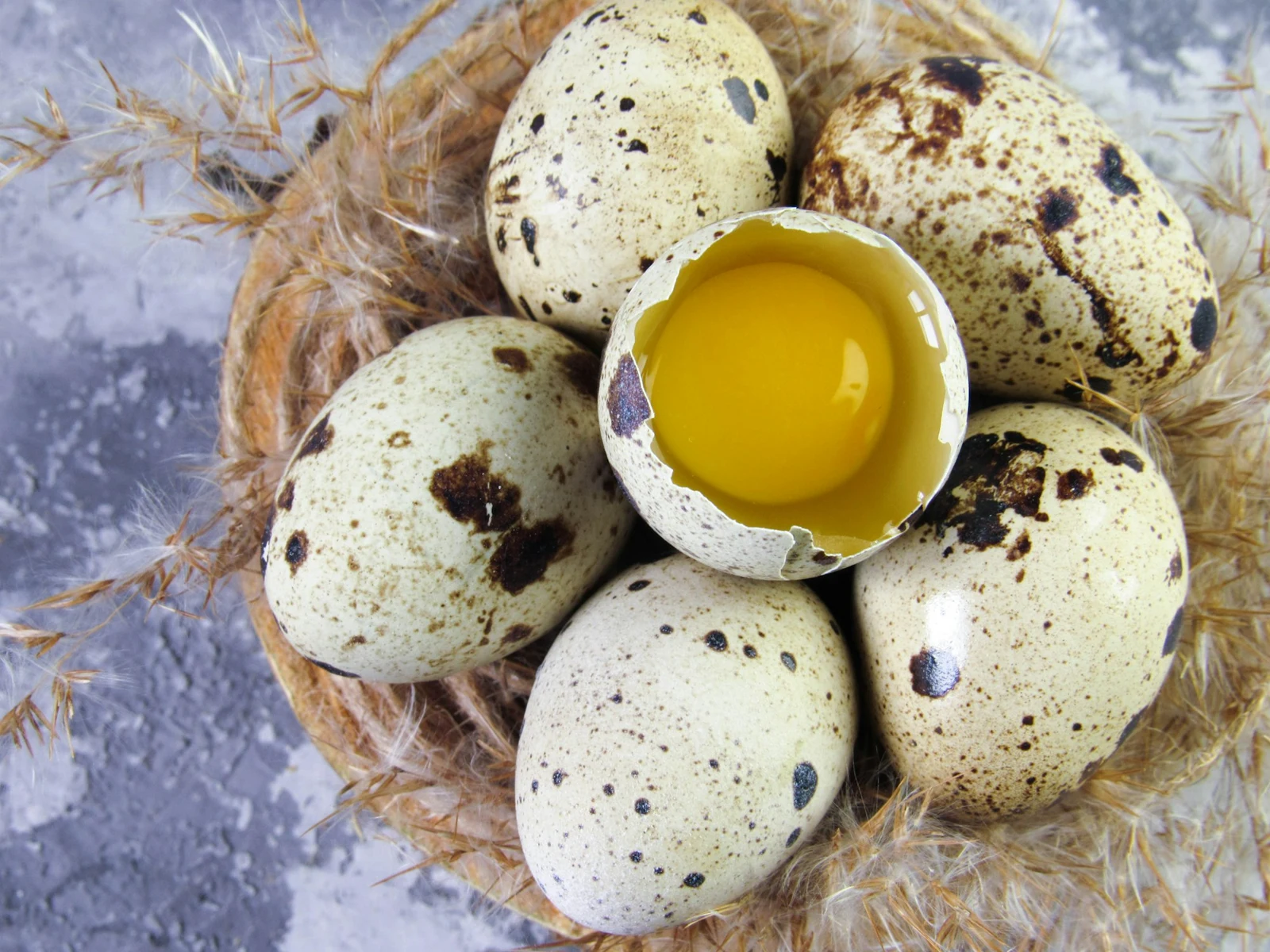
Quail eggs are small eggs produced by the coturnix quail, measuring about 1.5 inches in length. They are typically brown with dark speckles and have a rich, delicate flavor. These eggs are considered a delicacy in many cultures.
Quail eggs are small eggs produced by the coturnix quail, measuring about 1.5 inches in length. They are typically brown with dark speckles and have a rich, delicate flavor. These eggs are considered a delicacy in many cultures.
Nutrition & health benefits
per 100g: fat g: 11
carbs g: 0.2
fiber g: 0
iron mg: 3.6
sugar g: 0
water g: 75
zinc mg: 1.1
calories: 158
omega3 g: 0.01
omega6 g: 1.69
protein g: 13
sodium mg: 60
calcium mg: 50
folate mcg: 1
magnesium mg: 7
potassium mg: 132
vitamin a iu: 540
vitamin c mg: 0
vitamin k mcg: 0
saturated fat g: 3.6
per serving: fat g: 1.2
carbs g: 0.02
calories: 14
protein g: 1.2
serving size: 1 egg
Quail eggs are rich in nutrients, including protein, vitamins, and minerals, contributing to overall health. They may help in strengthening the immune system and enhancing reproductive health.
major: Complete protein with all nine essential amino acids in the ideal ratio.
Rich in choline, vitamin D, B12, selenium and lutein for eye health.
Modern research shows moderate egg intake does not raise cardiovascular risk for most people.
evidence: Consensus among USDA, NIH and WHO reviews is that quail eggs contributes positively to a balanced eating pattern when consumed in appropriate portions.
Cooking methods
cutting: Use a sharp knife to prevent crushing.
peeling: Peel under running water for ease.
washing: Not necessary if sourced from a reliable supplier.
cleaning: Rinse under cold water before use.
buying tips: Choose fresh eggs without cracks.
Check for a clean shell.
cooking methods: Boiling
Poaching
Frying
Pickling
freshness indicators: Firmness of the egg
Clean shell
seasonal buying guide: Best bought fresh in the spring and summer months.
**Cleaning**
Rinse under cold water before use.
**Washing**
Not necessary if sourced from a reliable supplier.
**Peeling**
Peel under running water for ease.
**Cutting**
Use a sharp knife to prevent crushing.
Cultivation
climate: Temperate to subtropical
harvesting: Eggs are collected daily.
temperature: Optimal between 18 to 24 degrees Celsius
growing season: Year-round
harvest period: Ongoing throughout the year.
growing regions: Asia
Europe
North America
Recipes
name: Quail Egg Salad
tags: salad
eggs
French cuisine
light meal
tips: Serve chilled for best flavor.
method: Hard-boil quail eggs, peel, and cool.
Arrange mixed greens on a plate.
Slice quail eggs in half and place on top.
Drizzle with vinaigrette and season.
region: Provence
country: France
cuisine: French
servings: 4
cook time: 5 minutes
image url: https://example.com/quail_egg_salad.jpg
nutrition: protein: 10
calories: 120
prep time: 10 minutes
chef notes: Light and elegant, perfect for a summer lunch.
difficulty: Easy
description: A refreshing salad featuring quail eggs, mixed greens, and vinaigrette.
ingredients: 12 quail eggs
2 cups mixed greens
1/4 cup vinaigrette
Salt to taste
recipe source: Gourmet Magazine
suitable diets: Gluten-free
Origin & history
ancient uses: Quail eggs were used in ancient culinary practices and mentioned in various historical texts.
region of origin: East Asia
country of origin: Asia
historical timeline: event: Quail domestication believed to begin in 3000 BC.
cultural significance: Considered a delicacy in many Asian and European cuisines.
domestication history: Quail have been domesticated for thousands of years, primarily in East Asia.
traditional importance: Used in seasonal dishes and celebrations.
Storage
freezing: Not recommended due to quality loss.
shelf life: 2-3 weeks refrigerated
refrigeration: Essential for maintaining freshness.
best practices: Store in a cool, dry place
Handle with care
common mistakes: Storing at room temperature
storage methods: Refrigeration
Controlled-atmosphere storage
spoilage indicators: Off-smell
Discoloration
Transportation
packaging: Typically packaged in cartons or trays with cushioning.
shelf life: 2-3 weeks in refrigeration.
shipping methods: Air and land transport.
storage temperature: 1-4 degrees Celsius
cold chain requirements: Refrigerated transport recommended.
Sustainability
sustainable farming: Encouraged due to lower resource input compared to other poultry.
More about this food
Quail eggs are about one-third the size of chicken eggs.
They are high in nutrients and often consumed raw or lightly cooked.
In some cultures, they are thought to have health benefits related to fertility.
Source references
url: https://nutritionalinstitute.org/quail-eggs
type: journal
year: 2021
title: The Nutritional Benefits of Quail Eggs
authors: Smith, J.
publisher: Nutritional Institute

 Quail Eggs